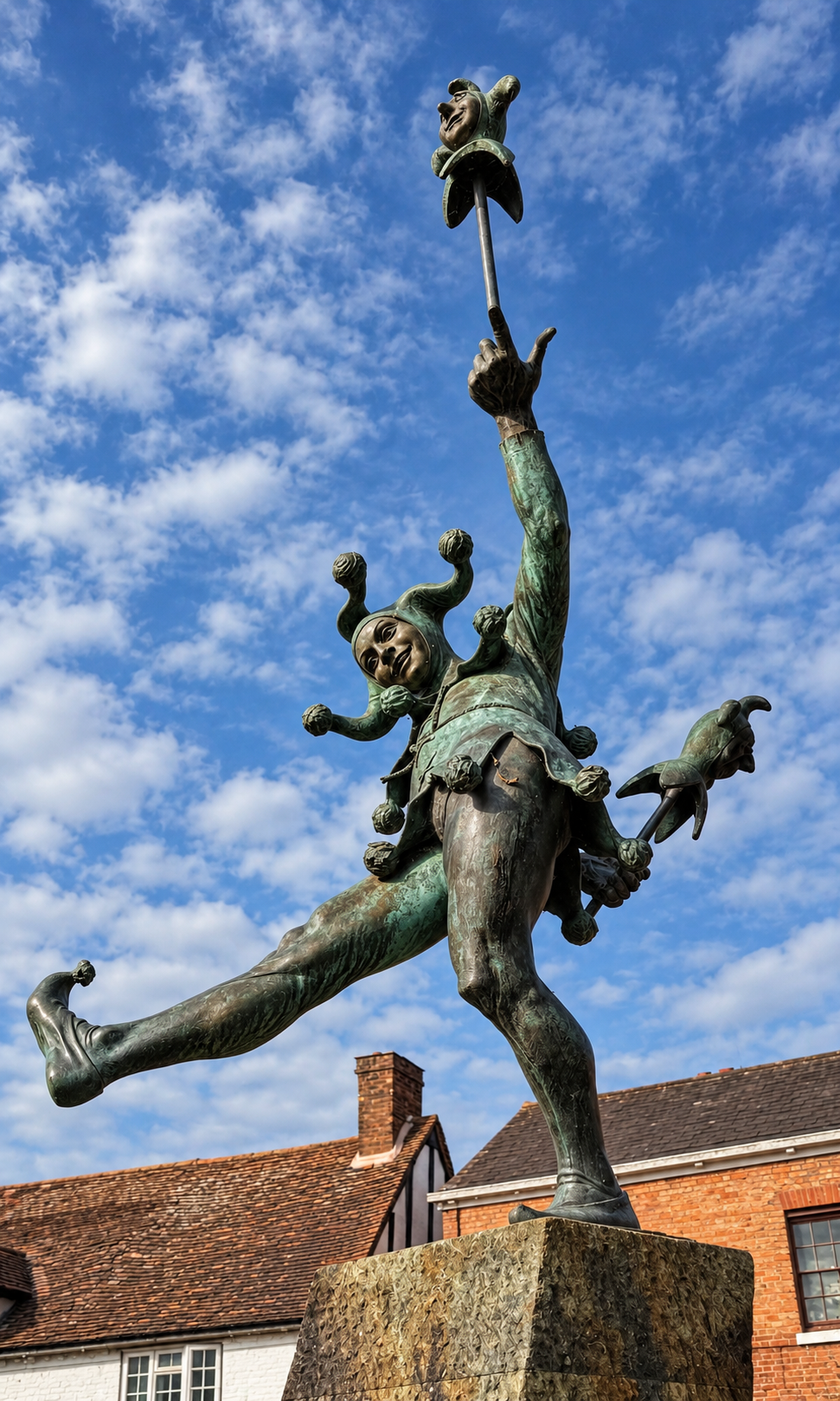
Great Fool
"The Fool doth think he is wise, but the wise man knows himself to be a fool,” “O noble fool! A worthy fool!” from As You Like It, by Wm. Shakespeare.
While spending time in Stratford upon Avon with Emily, I came across the statue of the Court Jester, seen as the fool. Only the jester of the King’s Court could speak truth to power.
The story of Ryokan Taigu (1758-1831), whose chosen name literally means “Great Fool,” was in an earlier Reflection, "The Thief." After the thief broke into the hut, according to one version of the story, he found nothing to steal. Ryokan said to the thief: "You have come a long way to visit me, and you should not return empty-handed. Please, take my clothes as a gift.” The thief took the clothes and fled. Ryokan sitting naked penned his famous haiku
The thief left it behind:
the moon
at my window
Perhaps seeing the old man as foolish for giving away his last bit of clothing, the thief does not yet realize Ryokan's teaching of non-attachment, of letting go, nor appreciate his simple act of generosity. He doesn't realize the wisdom of the Great Fool, who is completely free. While able to take the old man’s clothing, the thief could not grasp the Great Fool’s ungraspable Buddha Nature.